
Most of us grow up believing our career will eventually make us feel settled.
Not just financially secure—but internally secure. Like once we find the right role, the right industry, the right trajectory, something inside us will finally click into place.
And yet, even when the job looks good on paper, many of us feel an unexpected restlessness.
We tell ourselves we should be grateful.
We worked hard. We did what we were told.
So why does it still feel like something is missing?
Part of the problem is not that work is meaningless. It’s that we’ve quietly asked it to carry too much meaning.
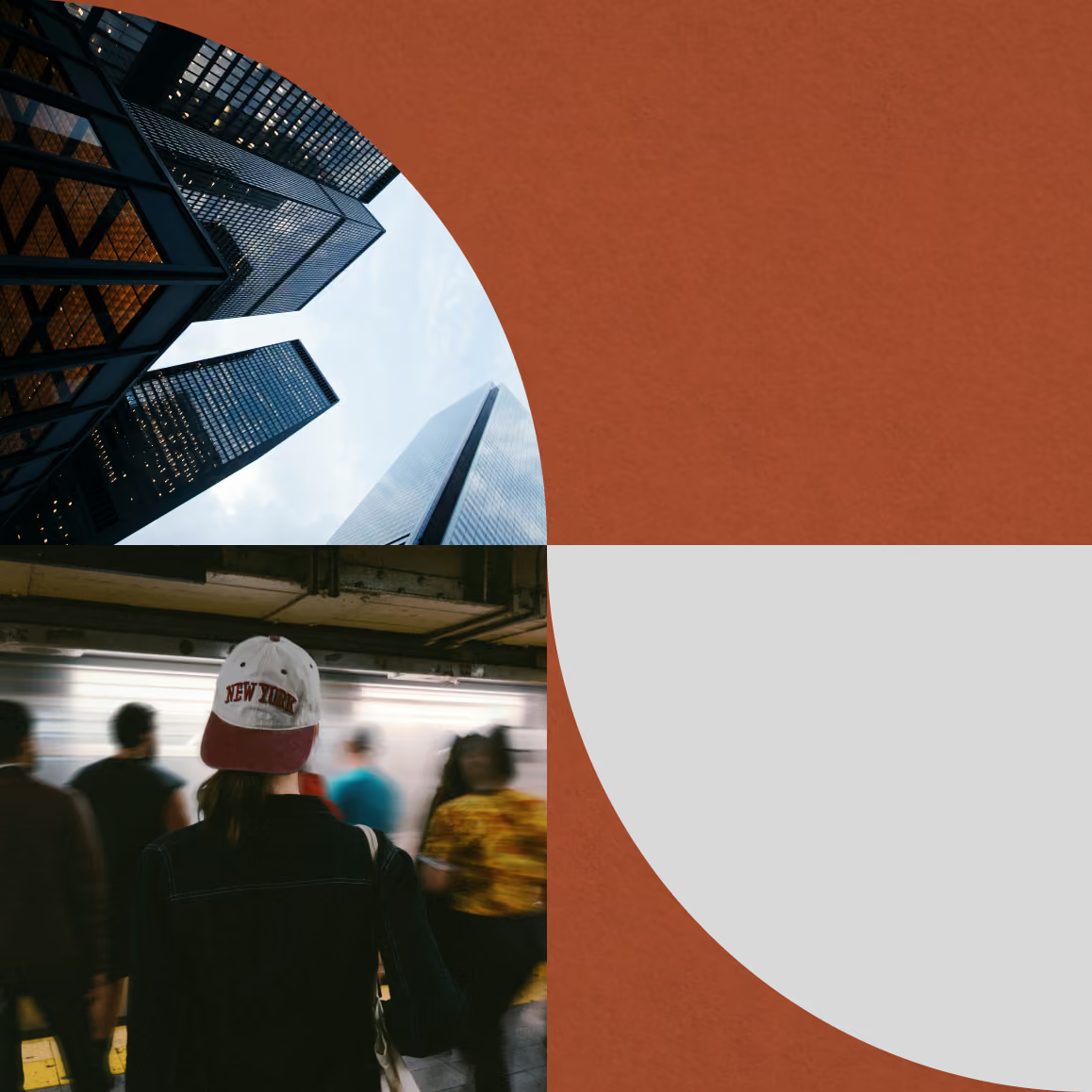
Somewhere along the way, career stopped being just something we do and became a statement about who we are. We introduce ourselves with our job titles. We measure our progress in promotions. We scroll past other people’s success and feel our own worth subtly rise or fall.
Work becomes more than contribution — it becomes confirmation.
Am I valuable? Look at my job.
Am I successful? Look at my position.
Am I somebody? Look at what I do.
That’s a heavy load for any job to carry.
Maybe it’s because we quietly expect our work to give us more than it was ever meant to give.
We don’t just want a paycheck from our careers—we want purpose.
We want meaning. We want identity. We want our work to tell us who we are and why we matter. And when it can’t do all of that, we feel disappointed… or worse, defective.
But what if the problem isn’t that we’re doing the wrong work?
What if the problem is the weight we’re asking work to carry?
In our culture, careers have slowly become a form of self-definition. We introduce ourselves by what we do. We measure our worth by our productivity. We treat job titles like status symbols, the way previous generations treated the clothes they wore or the cars they drove. Work becomes less about contribution and more about validation.
So we choose jobs not primarily by asking, “How can I serve?”
but by asking, “Will this make me feel like someone?”
And that’s a heavy burden for any job to bear.
Work, at its best, really does matter. It gives shape to our days. It allows us to contribute, to create, to be useful to others. There is something deeply human about working with our hands and minds and offering the results to the world. In that sense, work can be life-giving.
But when work becomes the place we look for our deepest sense of worth, it slowly begins to disappoint us. Not because work is bad—but because it was never meant to be ultimate.
We sense this instinctively. We know careers end. Companies change. Skills fade. Recognition doesn’t last. Even our best efforts eventually slip out of view. And yet, we still ache for our lives to mean something beyond quarterly results and résumés.
That ache points to something important.
It suggests that maybe we weren’t designed to build our identity from what we produce, but to express an identity that already exists. Maybe work is meant to flow from who we are—not determine who we are.
When our value depends on our performance, work becomes exhausting.
When our identity depends on our role, rest feels undeserved.
When our worth depends on our success, failure becomes unbearable.
But imagine a different starting point.
What if your value wasn’t something you had to earn through achievement?
What if your worth wasn’t something your career had to prove?
What if you were already enough—before the promotions, before the recognition, before the grind?
From that place, work changes. It becomes less about self-creation and more about self-giving. Less about proving yourself and more about participating in something larger than yourself. Less about asking work to save you—and more about letting it be what it was always meant to be: a meaningful, but limited, part of a full human life.
Maybe the reason your career hasn’t fully satisfied you isn’t because you chose wrong.
Maybe it’s because you were never meant to find your deepest fulfillment there.
And maybe that longing—for purpose that lasts, for meaning that survives failure, for a life that matters beyond what you produce—isn’t a flaw to fix…but an invitation to discover where your true worth comes from in the first place.











.svg)
