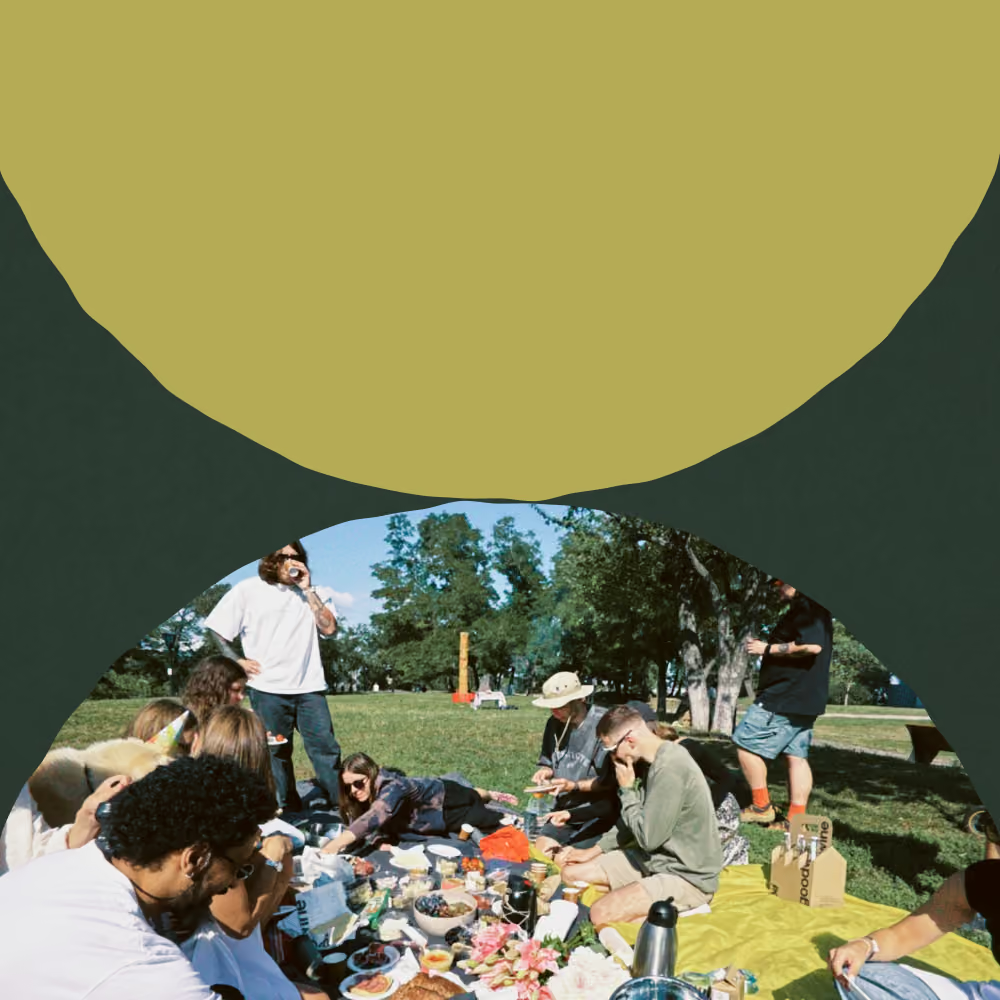
Who are explorers?
Explorers are spiritually curious but often wary of institutions, beginning their search from places of emptiness, pain, or longing. They’re drawn to meaning, belonging, and authenticity.We reach them best by meeting them with empathy, creating space for reflection, and sharing real stories that spark curiosity.
Common traits:
Spiritually curious: Open to prayer and reflectionSearching for meaning: Asking deep questions about identity, purpose, and fulfillmentCautious of institutions: Many have church backgrounds, but feel hurt or disillusioned.Longing for belonging: Drawn to beauty, healing, justiceResponsive to empathy: Trust grows through listening, not preaching.
People often begin in one of four places:
Asleep to the void: Too busy or content to notice.Living with the void: Aware but resigned to emptiness, numbing or coping.Experimenting in the void: Turning to psychedelics, magic, or the occult in search of meaning or escape.Touched by the void: Awakened by grief, suffering, beauty, or vulnerable moments.When faced with the void, some begin to explore, acknowledging their questions and starting to seek meaning or purpose.
Explorers respond best when we:
Lead with curiosity, not conclusions Create space to process, not pressure Show real-life stories, not just abstract ideasEveryone connects with meaning and purpose in a specific way. The audience segments are how we can meet each unique explorer at this stage in their journey.
Segments: How People Connect to Meaning
Segments reflect how someone currently relates to meaning, truth, and spiritual questions — not fixed identities, but postures that can shift over time. They help us attune to a person’s longings, doubts, and worldview so we can meet them with care, using the right tone, depth, and language.
Segment: Justice Seeker
Motivated by justice, truth, and societal reform, but hesitant or hostile toward institutional religion.
Justice Seekers are principled individuals with a strong moral compass, often formed outside of religious structures. They’re moved by injustice, hypocrisy, and power abuse — and in many cases, have come to view religion, especially the Church, as complicit in these failures. For them, spirituality is seen as optional or unnecessary to be ethical. Some are atheists or agnostics; others may believe in a higher power but reject the idea that religious institutions speak on its behalf.
They are intellectually engaged and deeply values-driven. Their longing is not for spiritual fulfillment per se, but for moral coherence in a fractured world. If faith is to become relevant, it must be reframed not as authority or doctrine, but as a pathway to integrity, truth-telling, and justice. Approaching them through shared values — not belief systems — is often the only viable opening.
“Driven by a deep sense of justice and fairness, yet skeptical of institutions.”
They may ask:
- “Why does injustice persist — and what’s my role in it?”
- “Do I need religion to be a good person?”
Demographics:
- Often Millennials or Gen Z
- Skews male and highly educated
- Politically left-leaning
- Frequently atheist, agnostic, or non-affiliated
View of God:
- Frequently absent or rejected
- If acknowledged, God is an abstract concept — not personal or needed for ethics
Affiliation with the Church:
- Highly skeptical or negative
- Sees Church as outdated, oppressive, or morally compromised
Life Attitudes:
- Rational, pragmatic, often activist
- Seeks to improve the world, not “be saved”
- Comfortable with confrontation, avoids sentimentality
Barriers:
- Intellectual rejection of faith
- Negative associations with religious power
- Mistrust of emotional/spiritual language
Longings:
- Moral clarity
- Justice and equity
- Meaningful contribution to society
How to See them Well:
- Avoid religious jargon, appeals to tradition, or emotional witness
- Trust is built through shared purpose, not persuasion
- Meet them with respect, rigor, and ethical alignment — let theology follow only if trust is earned
- Offer thought-provoking questions, not faith-based claims; show moral consistency before introducing theological ideas
- They feel honored when engaged at the level of reason and logic, when treated as equals in intellectual pursuit
________________________________________________________________________________________________________________________
Reflective Wayfarer
Deep feelers and thinkers on a search for meaning, often navigating ambiguity and pain in quiet introspection.
Reflective Wayfarers live with questions. They are sensitive, spiritually curious, and emotionally attuned — yet often burdened by anxiety, melancholy, or grief. They want a faith that makes space for doubt and suffering, not one that rushes them toward certainty. Their longing is not for definitive answers, but for coherence, peace, and the permission to search without shame.
They are often moved by beauty, metaphor, and the arts. The Church may feel distant or disappointing, especially if they’ve experienced judgment or emotional disconnection. Yet they haven’t given up on the sacred entirely. They are still hoping that the world — and their own pain — might hold deeper meaning. And they’ll open up when someone listens without rushing them.
“Curious about meaning, and drawn to explore faith with vulnerability.”
They ask:
- “What kind of person am I becoming?”
- “Is there something deeper I’m missing?”
They’re drawn to gentle, artful invitations into beauty, healing, and reflective questioning. Pushiness will repel them — patience will invite them.
Demographics:
- Mostly Millennials and Gen Z
- Skews female
- High rates of anxiety, depression, or emotional sensitivity
- Often creative or caregiving professions
View of God:
- Ambiguous, mysterious, evolving
- God may be present as beauty, silence, or hope — not doctrine
Affiliation with the Church:
- Disillusioned, cautious, or quietly distant
- Emotionally wounded by moralism or indifference
Life Attitudes:
- Compassionate, introspective, intuitive
- Willing to sit with suffering, but longing for healing
Barriers:
- Emotional fatigue
- Fear of being judged or misunderstood
- Ambivalence toward organized religion
- Cynicism toward simplistic answers or overconfident claims
Longings:
- Inner peace and coherence
- A faith that can hold beauty and pain together
- Slow, soulful companionship
- A spirituality that honors both suffering and hope without rushing resolution
How to Love them Well:
- Don’t rush them — honor their story
- Use art, metaphor, and contemplative space as on-ramps
- Provide emotionally attuned guides who lead with listening
- Avoid transactional messaging or “fix it” faith
________________________________________________________________________________________________________________________
Mystical Soul
Spiritually open and experiential, they explore energy, nature, and transcendence outside of organized religion.
Mystical Souls are naturally spiritual, but not religious. They’re drawn to awe, energy, mystery, and the sacred within the natural world and personal experience. These individuals are often interested in meditation, astrology, healing, and Eastern or Indigenous spiritual practices. Many draw from multiple spiritual traditions simultaneously — blending mindfulness, nature-based rituals, ancestral practices, or energy work in a way that feels authentic and cohesive to them. Their worldview tends to be holistic, fluid, and experiential — emphasizing felt presence over formal beliefs.
Their mistrust of institutions is less ideological and more intuitive. Church feels limiting or lifeless, whereas the universe, nature, or energy fields feel alive. While skeptical of organized religion, they’re open to spiritual conversation — as long as it doesn’t try to box them in.
“Open to awe, energy, and the sacred, but not organized religion.”
They may ask:
- “Where do I find peace that transcends my mind?”
- “What does it mean to be connected — to others, to the earth, to the divine?”
Demographics:
- Gen Z and Millennials
- Skews female
- Often engaged in wellness or creative fields
- Politically progressive, environmentally aware
View of God:
- Panentheistic or undefined — God as energy, universe, or consciousness
- Not interested in dogmatic definitions
Affiliation with the Church:
- Mildly negative to indifferent
- Church is viewed as restrictive or outdated
Life Attitudes:
- Exploratory, curious, intuitive
- Oriented toward healing and personal growth
- Prioritizes freedom, authenticity, and alignment
Barriers:
- Church feels exclusive, rigid, or lifeless
- Spiritual identity already “full” from other traditions
- Aversion to perceived judgment
- Mistrust of religious exclusivity or superiority
Longings:
- Transcendence and connection
- Emotional and spiritual harmony
- Safe, sacred spaces to explore
Ways to Love Them Well:
- Offer invitations to wonder, not conclusions
- Beauty, nature, and mystical tradition are bridges
- Group contemplative practice may engage more than theology
- Don’t try to “convert” — invite into the sacred gently
- Honor their spiritual vocabulary and avoid correcting it. Let resonance precede catechesis.
______________________________________________________________________________________________________________________________________
Segment: Deep Connector
Yearning for healing, community, and unconditional acceptance after personal pain and isolation.
Deep Connectors often carry deep wounds — from trauma, fractured families, addiction, or emotional neglect. They may identify as “spiritual” or “formerly Catholic,” but their primary longing is not theological clarity — it’s to feel safe, seen, and loved. For many, trust is fragile, shaped by rejection, identity struggles, or toxic religious experiences.
They crave meaningful relationships and belonging, but fear vulnerability and judgment. Their sense of worth may be brittle. While faith may feel distant, their spiritual hunger is real — they want a path toward healing, but only in spaces that feel emotionally safe and human first.
“Carries quiet ache and hope for healing, drawn to faith that offers care and belonging.”
They may communicate:
- “I want to be seen, loved, and accepted without having to perform.”
- “I’ve been hurt, but I still hope for something more.”
Demographics:
- Mostly Gen Z and younger Millennials
- Skews female
- Higher levels of trauma, addiction, and loneliness
- Higher representation of marginalized or identity-questioning individuals
View of God:
- Conflicted or ambivalent — sometimes hopeful, sometimes angry
- May see God as distant, conditional, or emotionally unsafe
Affiliation with the Church:
- Wounded, wary, often angry
- Sees Church as judgmental, exclusive, or tied to past hurt
Life Attitudes:
- Emotionally vulnerable, longing for safety
- Struggles with identity and belonging
- Deep desire to connect but afraid of rejection
- Values lived empathy more than ideas or ideology
Barriers:
- Fear of judgment or moral condemnation
- Emotional wounds from past faith or family experiences
- Cynicism toward institutional authority
Longings:
- Healing and wholeness
- Belonging without condition
- Mentorship and trust
How to Love them Well:
- Require deep listening, not quick answers
- Safe space, personal presence, and patience are essential
- Pair with older, emotionally intelligent mentors
- Don’t “teach” right away — witness and accompany
________________________________________________________________________________________________________________________
Segment: Quiet Companion
Private and gentle, they carry residual faith and spiritual interest, often rooted in past Catholic identity.
Quiet Companions are introspective and spiritually inclined, often shaped by a Catholic upbringing. Though they may no longer practice regularly, their faith isn’t abandoned — it’s dormant. They value personal growth, inner peace, and quiet prayer. Their spiritual life may be private, even hidden, but it matters deeply to them.
They don’t resonate with hype or noise. What draws them in is simplicity, authenticity, and a slow reawakening of habits that once brought them close to God. These are the people for whom a spiritual journal, a moment of silence, or a heartfelt Mass can feel like coming home.
“Nourished by quiet faith and personal growth, but often on the edge of Church life.”
They might say:
- “I want to grow, but I don’t know where to start again.”
- “My faith used to be stronger… and I miss that.”
Demographics:
- Often Gen X or older Millennials
- Culturally Catholic background
- More likely to be female
- Moderate mental health and life stability
View of God:
- Relational, often as a comfort or presence
- May feel distant but still trustworthy
Affiliation with the Church:
- Warm, but often lapsed
- Positive associations, but low active engagement
Life Attitudes:
- Reflective, steady, sometimes tired
- Longs for renewal but resists noise or pressure
Barriers:
- Apathy or drift
- Feeling spiritually stagnant or uninspired
- Life’s busyness or discouragement
- Feels spiritually out of shape; unsure how to start again
Longings:
- Interior peace and reconnection with God
- Reawakening spiritual discipline
- Gentle encouragement to re-engage
- To rediscover prayer practices that once brought peace
How to Love Them Well:
- Use invitational language (“want to try this with us?”)
- Light-touch digital content (prayer prompts, journaling)
- Encourage habits of formation, not heavy theology
- Slow, steady pathways back to community
- Seasonal rhythms like Lent or Advent may be especially effective soft re-entry points, times when spiritual reflection feels culturally familiar and emotionally resonant.
________________________________________________________________________________________________________________________
Segment: Goodness Seeker
Motivated by kindness, joy, and moral clarity — seeking to live a good life, often lightly tethered to faith.
Goodness Seekers are bright, socially active, and optimistic. They want to be good people — to love others, make a difference, and enjoy life. Many still identify as Catholic or Christian, but their engagement tends to be light and event-based: holidays, volunteering, weddings, etc. Their spirituality is moralistic and positive, not theological or mystical.
They’re the “good neighbors” — generous, affirming, and energized by doing good. But their faith, if present, is often rooted in early formation that hasn’t deepened much since. They tend to avoid depth or complexity, preferring joy over tension. They often represent the public face of Catholicism — showing up for holidays, sacraments, or acts of service — and their cultural connection gives them quiet influence within Catholic identity.
“Guided by care for others and a desire to live with joy and purpose.”
They say things like:
- “I just want to be a good person.”
- “I think faith is about loving people well.”
Stories of goodness, transformation, and personal joy will land best. Depth must be introduced in small doses.
Demographics:
- Mixed age, often suburban
- Skews female and family-oriented
- High community involvement, civic engagement
View of God:
- Loving and positive, like a benevolent parent or life coach
- Not especially personal or central to daily life
Affiliation with the Church:
- Warm and event-based
- Engaged on holidays, sacraments, or community service
Life Attitudes:
- Optimistic, active, caring
- Avoids conflict, prefers simplicity
- Seeks harmony and positivity
Barriers:
- Low urgency or hunger for depth
- Avoidance of spiritual tension, prefers inspiration over introspection
- Believes faith is “nice,” but not essential
Longings:
- Joy, purpose, and affirmation
- Community and meaning
- Relevance and simplicity in spiritual practices
How to Love Them Well:
- Start with celebration, not critique
- Use social, communal formats (events, service)
- Help them connect moral intuition to deeper formation
- Introduce theological depth gradually, with joy and beauty
- Offer uplifting community first, deeper formation later, they’ll go deeper if they feel good first